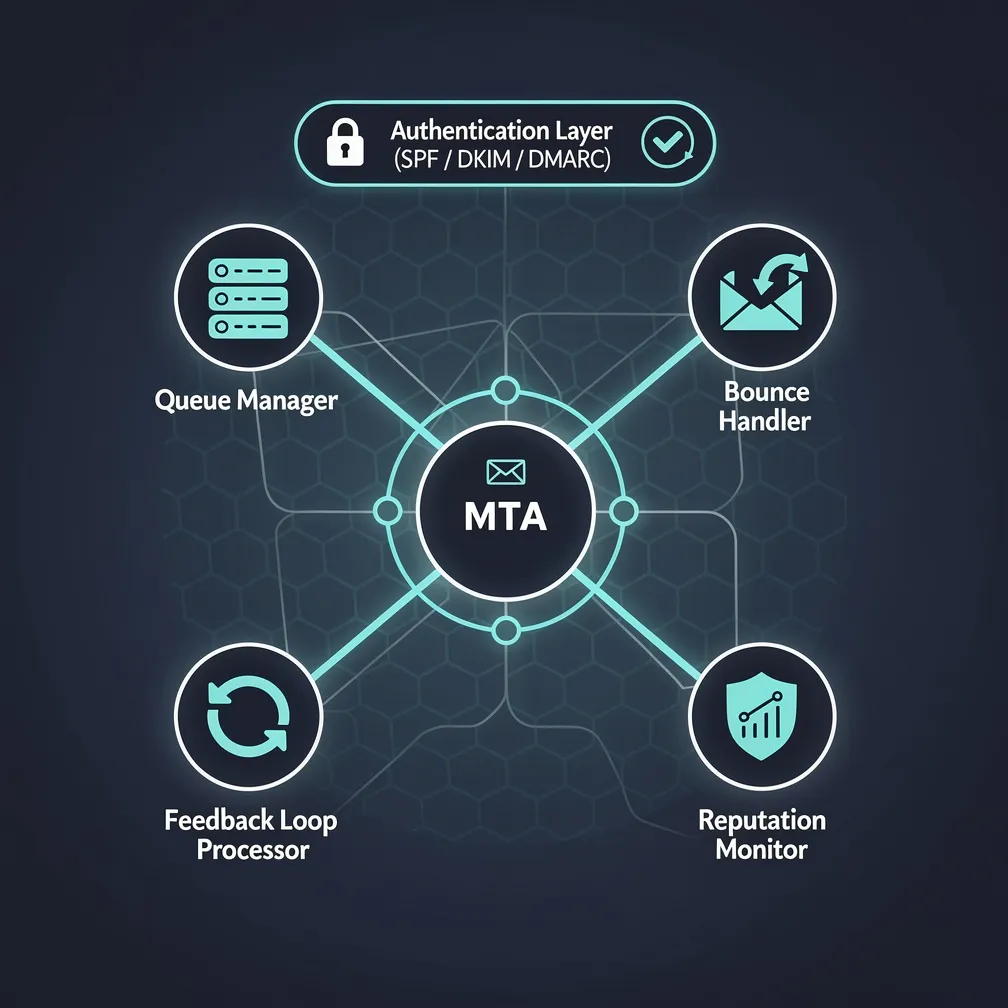
Modern email delivery platforms rely on multiple interconnected subsystems working in harmony to ensure messages reach recipient inboxes reliably. Understanding these email delivery subsystems is essential for IT administrators and DevOps engineers tasked with maintaining high deliverability rates and sender reputation.
The Mail Transfer Agent (MTA) serves as the foundation of any email delivery architecture. This MTA email component handles the actual transmission of messages via SMTP protocol, establishing connections with recipient mail servers, negotiating TLS encryption, and managing the technical handshake required for successful delivery. The MTA must be highly optimized for throughput while maintaining strict compliance with RFC standards.
Sophisticated queue management determines how messages flow through the system. This subsystem prioritizes messages based on sender tier, implements throttling rules to respect recipient domain policies, and manages retry logic when temporary failures occur. Intelligent queue management prevents overwhelming recipient servers while maximizing delivery speed, adjusting send rates dynamically based on real-time feedback from ISPs.
Effective bounce handling automatically classifies responses into hard bounces (permanent failures) and soft bounces (temporary issues). The subsystem maintains suppression lists to prevent repeated sending to invalid addresses, protecting sender reputation and reducing waste. Automated list hygiene removes problematic addresses before they impact deliverability metrics.
ISPs provide complaint notifications through feedback loops, typically in ARF (Abuse Reporting Format). This subsystem processes these complaints in real-time, automatically unsubscribing complainants and monitoring complaint rates across campaigns. Maintaining low complaint rates is critical for inbox placement, making this subsystem essential for reputation management.
Continuous reputation monitoring tracks both IP address and domain reputation across major ISPs and blacklist services. This subsystem manages IP warmup schedules for new sending infrastructure, calculates deliverability scores, and alerts administrators to reputation issues before they impact delivery rates. Proactive monitoring enables quick remediation of potential problems.
Modern email delivery architecture requires robust authentication implementation. This subsystem manages SPF record validation, applies DKIM signatures to outgoing messages, and verifies DMARC alignment. Proper authentication proves message legitimacy to receiving servers, significantly improving inbox placement rates and protecting against spoofing attacks.
These subsystems don’t operate in isolation—their integration defines platform effectiveness. The MTA consults reputation data before sending, queue management responds to bounce patterns, and authentication results feed back into reputation scoring. This interconnected approach ensures consistent, reliable delivery at scale.
At Email Delivery Pro, we’ve architected each subsystem to work seamlessly together, providing the robust infrastructure your email operations demand. Ready to see how our platform compares? Visit our comparison page to evaluate features and capabilities that matter most to your organization.