Email authentication failures can signal sophisticated phishing campaigns, domain spoofing attempts, or configuration issues that compromise your organization’s security posture. While aggregate reports provide statistical overviews, DMARC forensic reports deliver granular, per-message failure data that enables security analysts to investigate specific incidents in real-time. Understanding how to request, analyze, and leverage these reports is critical for organizations serious about email security and threat detection.
DMARC forensic reports, also known as DMARC failure reports or DMARC RUF reports (Reporting URI for Forensic reports), are defined in RFC 6591 as message/feedback-report content types. Unlike aggregate reports that compile statistics over 24-hour periods, forensic reports provide near-real-time, per-message failure notifications triggered immediately when a message fails DMARC policy evaluation.
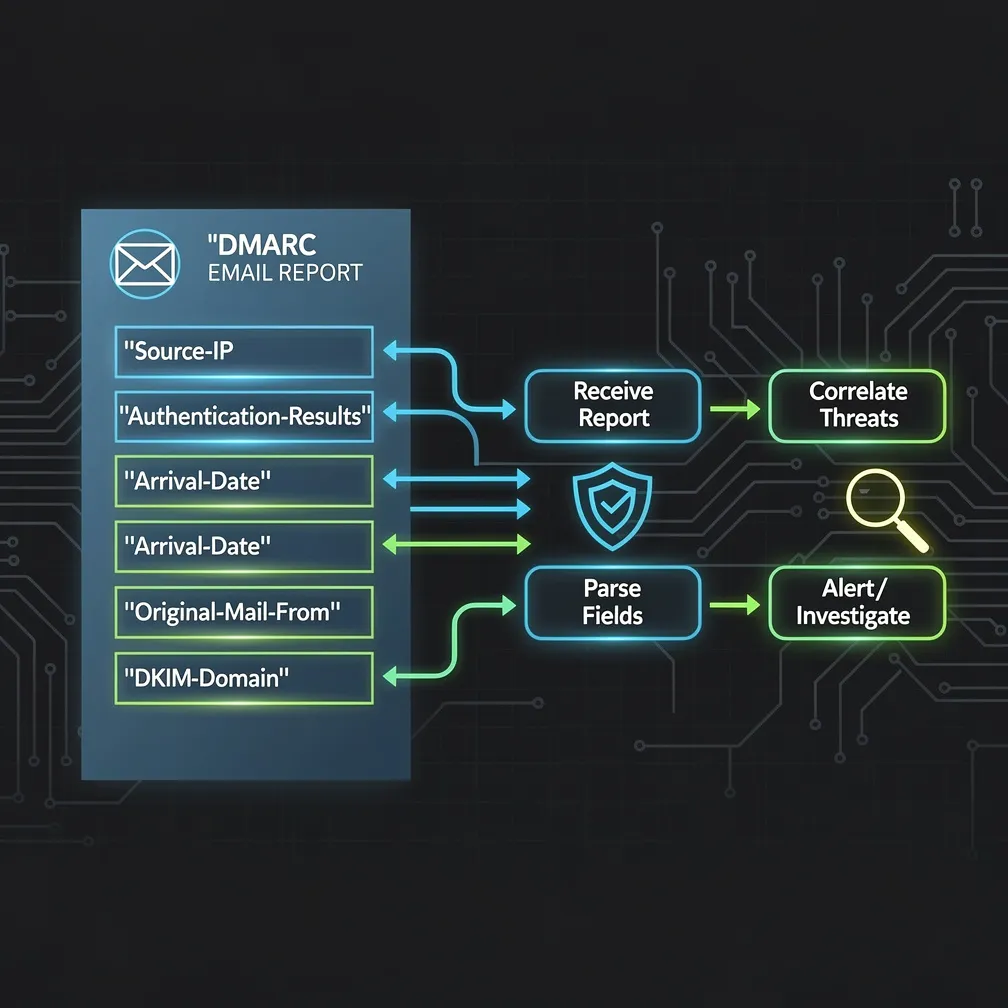
These reports contain individual message metadata that allows security teams to examine specific authentication failures as they occur. When a receiving mail server evaluates an incoming message against your published DMARC policy and detects SPF or DKIM authentication failures, it can generate a forensic report containing details about that specific message, including source IP addresses, authentication results, and potentially the original message headers or body.
The real-time nature of forensic reports makes them particularly valuable for incident response, enabling security analysts to identify and respond to active spoofing campaigns or authentication misconfigurations before they escalate into broader security incidents.
DMARC provides two distinct reporting mechanisms, each serving different analytical purposes:
Security analysts typically use aggregate reports for strategic monitoring and forensic reports for tactical incident response, making both reporting types complementary components of a comprehensive email security program.
DMARC forensic reports follow a standardized MIME format with message/feedback-report as the content type. Each report contains multiple required fields that provide essential context for failure analysis:
Additionally, forensic reports may include optional components such as original message headers or the full message body as an attachment. These optional elements provide deeper investigative context but raise significant privacy concerns, which we’ll address later in this guide.
Requesting DMARC forensic reports requires configuring specific tags in your DMARC DNS record. The ruf= tag specifies the email address or URI where forensic reports should be sent. Additionally, the fo= (failure options) tag controls which failure conditions trigger report generation:
An example DMARC record with forensic reporting configuration might look like this:
v=DMARC1; p=quarantine; rua=mailto:[email protected]; ruf=mailto:[email protected]; fo=1;
This configuration requests forensic reports for any authentication failure, providing maximum visibility into potential security incidents while generating higher report volumes that require appropriate processing infrastructure.
The real value of DMARC RUF reports emerges during threat analysis and incident investigation. Security analysts can leverage forensic data to identify multiple threat categories:
Source-IP analysis enables identification of spoofing attempts by correlating sender IPs against known legitimate sending infrastructure. Unauthorized senders attempting domain impersonation typically originate from IPs outside your organization’s authorized ranges.
Correlating authentication failures with known phishing campaigns helps security teams detect when their domains are being weaponized in active attacks. The Original-Mail-From field provides critical data for tracing impersonation patterns, revealing whether attackers are using exact domain matches or cousin domains.
Header analysis within forensic reports can reveal Business Email Compromise (BEC) indicators, including display name spoofing, reply-to manipulation, and other social engineering techniques that bypass basic authentication checks while still triggering DMARC failures.
Forensic reports present significant privacy challenges that have fundamentally impacted their adoption. Original message headers and bodies often contain personally identifiable information (PII) belonging to recipients, raising serious data protection concerns.
GDPR implications of forwarding recipient data to third parties have made many organizations hesitant to send forensic reports. RFC 6591 acknowledges these concerns and defines redaction mechanisms that allow receiving organizations to strip sensitive information before transmission.
In practice, many receivers either completely strip forensic reports or heavily redact them before sending, removing original message content and limiting reports to basic metadata. This privacy-first approach protects recipients but reduces the investigative value available to security analysts, creating tension between security visibility and privacy protection.
Security professionals have witnessed a significant decline in forensic report availability over recent years. Major mailbox providers including Gmail, Yahoo, and Microsoft have largely stopped sending DMARC failure reports due to privacy concerns and regulatory compliance requirements.
Privacy regulations, particularly GDPR in Europe and similar frameworks globally, have driven reduced adoption of forensic reporting. The potential liability associated with inadvertently forwarding PII outweighs the security benefits for many receiving organizations.
The industry has shifted toward alternative approaches including TLSRPT (TLS Reporting) and MTA-STS reporting, which provide transport-layer security visibility without exposing message content. Enhanced aggregate reports with more granular data represent another evolution, offering middle ground between aggregate statistics and full forensic detail.
Despite declining availability, organizations that receive forensic reports should integrate this data into broader security operations. Building threat intelligence from failure patterns enables proactive defense by identifying emerging spoofing techniques and attacker infrastructure.
Integrating forensic data into SIEM workflows centralizes email authentication failures alongside other security telemetry, enabling correlation with endpoint detection, network traffic analysis, and user behavior analytics. Automated alerting on spoofing indicators ensures security teams receive immediate notification of potential domain abuse.
Feeding forensic findings into incident response procedures accelerates investigation and remediation. When forensic reports indicate authentication misconfigurations rather than malicious activity, they guide improvements to SPF records, DKIM implementations, and overall email authentication architecture.
Security analysts should establish processes for regular forensic report review, failure pattern analysis, and authentication configuration tuning. Even with reduced report availability, the forensic data that remains accessible provides invaluable visibility into email-based threats targeting your organization and customers.
Conclusion: While DMARC forensic reports face challenges related to privacy and declining provider support, they remain powerful tools for security analysts investigating email authentication failures. Organizations should configure forensic reporting, implement appropriate privacy protections, and integrate available forensic data into comprehensive email security and incident response programs.
For help selecting an email delivery service that supports comprehensive DMARC reporting and authentication management, explore our provider comparison to find the right fit for your security requirements.