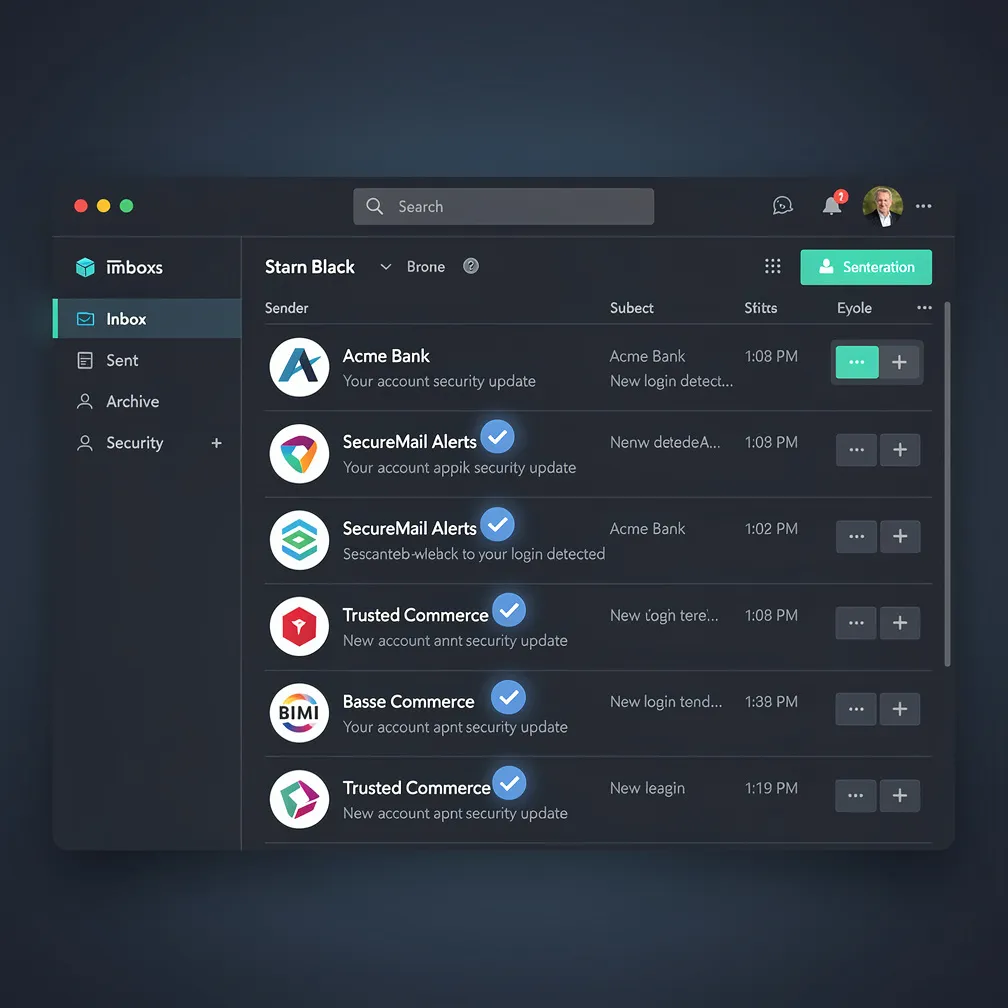
Your emails are authenticated. SPF passes. DKIM aligns. DMARC is enforced.
But when your message lands in someone’s inbox, what do they see next to your name?
A generic initial. A blank avatar. Nothing that says this is us.
That’s the gap BIMI closes.
Brand Indicators for Message Identification (BIMI) lets you display your verified brand logo directly in the inbox — right next to the sender name, where recipients make split-second decisions about what to open and what to ignore.
It’s not just cosmetic. It’s a trust signal backed by authentication infrastructure.
Here’s what BIMI delivers when implemented correctly:
BIMI isn’t a standalone feature you flip on. It sits on top of a fully enforced authentication stack:
The VMC is the biggest barrier for most organizations — it requires a trademarked logo and a certificate from DigiCert or Entrust. But the investment pays dividends across every email you send.
Gmail, Yahoo Mail, Apple Mail, and Fastmail all support BIMI logo display. That covers the majority of consumer and business inboxes worldwide.
Microsoft has indicated support is coming for Outlook — which will make BIMI essentially universal.
Email authentication gets your messages delivered. BIMI makes them recognized.
In a crowded inbox, the difference between opened and ignored often comes down to one thing: does the recipient instantly know who you are?
Your brand logo, verified and displayed at the moment of decision — that’s BIMI.
If your DMARC is already enforced, you’re one step away from turning every email into a branded touchpoint.
#BIMI #EmailAuthentication #EmailDeliverability #BrandSecurity #DMARC #EmailMarketing #CyberSecurity #BrandIdentity