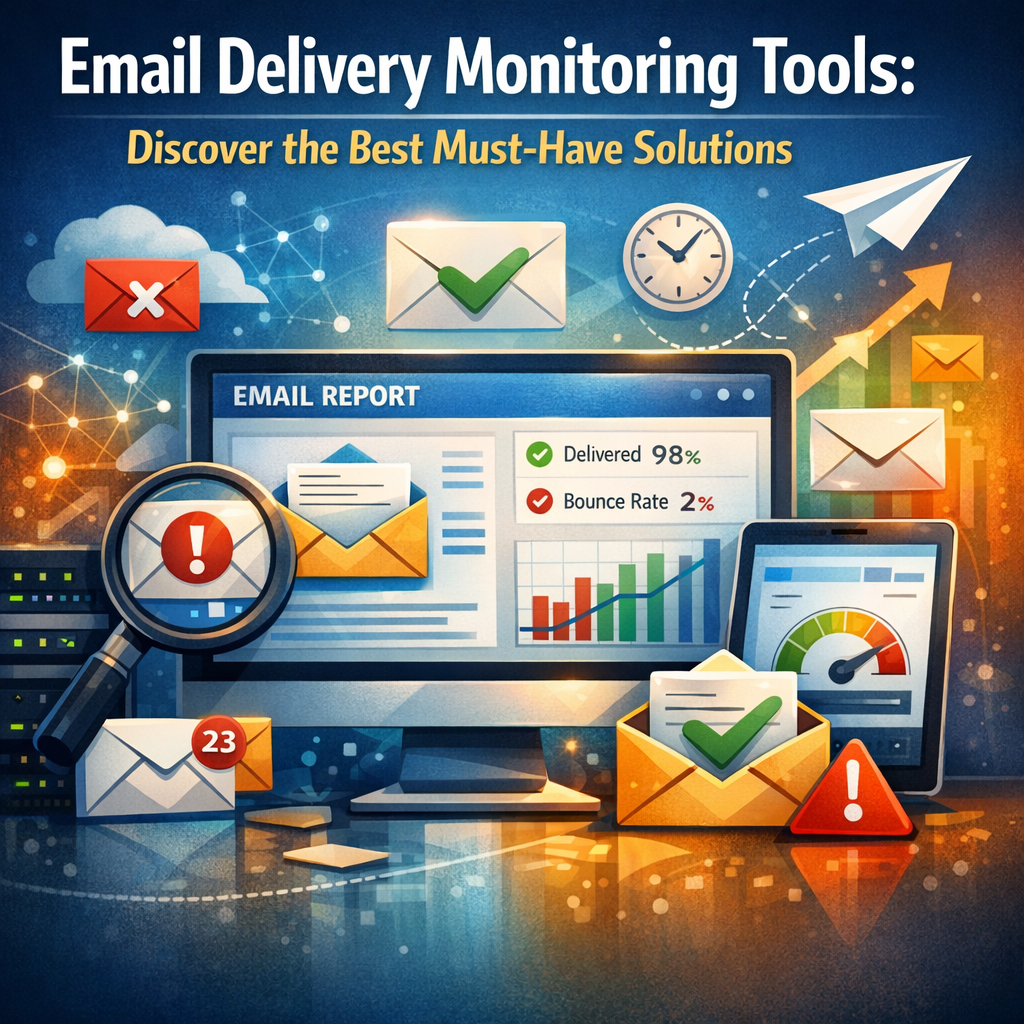
Email Delivery Monitoring Tools: An In-Depth Guide to Must-Have Solutions
Email Delivery Monitoring Tools are essential for businesses to ensure that their messages reach the intended recipients without delay or error. The digital landscape is saturated with emails jostling for attention, making it crucial for any organization to optimize its email delivery strategy. In this article, we delve into the world of these invaluable tools, exploring their benefits, features, and essential solutions that every business should consider.
Email delivery success is more than just hitting the send button. It’s about ensuring that your carefully crafted messages are not only delivered but also end up in the recipient’s inbox rather than the spam folder. Poor delivery rates can significantly hinder marketing efforts, damage sender reputation, and ultimately impact revenue.
Businesses need to track and monitor the effectiveness of their email campaigns meticulously. This is where Email Delivery Monitoring Tools come into play, offering insights and analytics that help in optimizing email strategies for maximum efficiency.
These tools come packed with numerous features aimed at enhancing email campaigns. Some of the notable features include:
1. Spam Testing and Avoidance: Comprehensive tools allow users to test emails against common spam filters, helping to avoid potential pitfalls that might land messages in the junk folder.
2. Inbox Placement Monitoring: This feature tracks whether emails are delivered to the primary inbox or rerouted to spam, providing detailed analysis on how and where emails land.
3. IP Address Monitoring: Keeps track of the sender’s IP reputation and helps maintain a clean sending history, crucial for ensuring high deliverability.
4. Bounce Rate Tracking: Tools often provide insights into bounce rates, distinguishing between hard bounces and soft bounces, enabling swift corrective actions.
5. Feedback Loop Analysis: Understanding customer complaints and feedback is essential, and these tools offer a way to gather and analyze such data.
6. Real-Time Analytics and Reporting: Effective monitoring involves access to up-to-date reporting that reflects the current performance and offers actionable insights.
When selecting an Email Delivery Monitoring Tool, there are several factors to consider to ensure compatibility with your business needs:
– Scalability: Consider whether the tool can grow with your business. As your email volume increases, the tool should be able to handle larger data sets without compromising on performance.
– Ease of Use: Tools should be user-friendly, allowing team members to navigate them without extensive training.
– Integrations: The ability to integrate with existing platforms, such as your CRM or marketing software, is crucial for seamless workflow.
– Cost-Effectiveness: Pricing models that provide flexibility can help manage costs without sacrificing essential features.
Here is a look at some of the must-have solutions that stand out in the market:
1. Mailgun by Sinch
Mailgun offers robust email verification and routing services, with real-time analytics and detailed deliverability reports. It’s an excellent choice for businesses seeking reliable performance.
2. SendGrid
Known for its scalability, SendGrid provides rich features such as email validation and delivery insights powered by powerful APIs, making it ideal for developers and larger enterprises.
3. SparkPost
SparkPost boasts impressive data analytics capabilities, enabling businesses to optimize their email performance through intelligent routing and real-time insight dashboards.
4. Postmark
For businesses focusing on transactional emails, Postmark ensures rapid delivery and tracking, with minimalistic tools designed for seamless integration and operation.
5. SenderScore from Validity
Although not a complete monitoring tool, SenderScore offers invaluable insights into IP reputation, playing a pivotal role in improving email delivery rates.
Email Delivery Monitoring Tools are indispensable in the modern business environment, ensuring that marketing and communication strategies are executed with precision and accuracy. By leveraging these powerful tools, businesses can protect their reputation, optimize engagement, and ultimately enhance their ROI. Choosing the right tool hinges on understanding your business needs, budget constraints, and desired level of insight. Creating a successful email delivery strategy is no longer an option but a necessity in today’s competitive landscape.