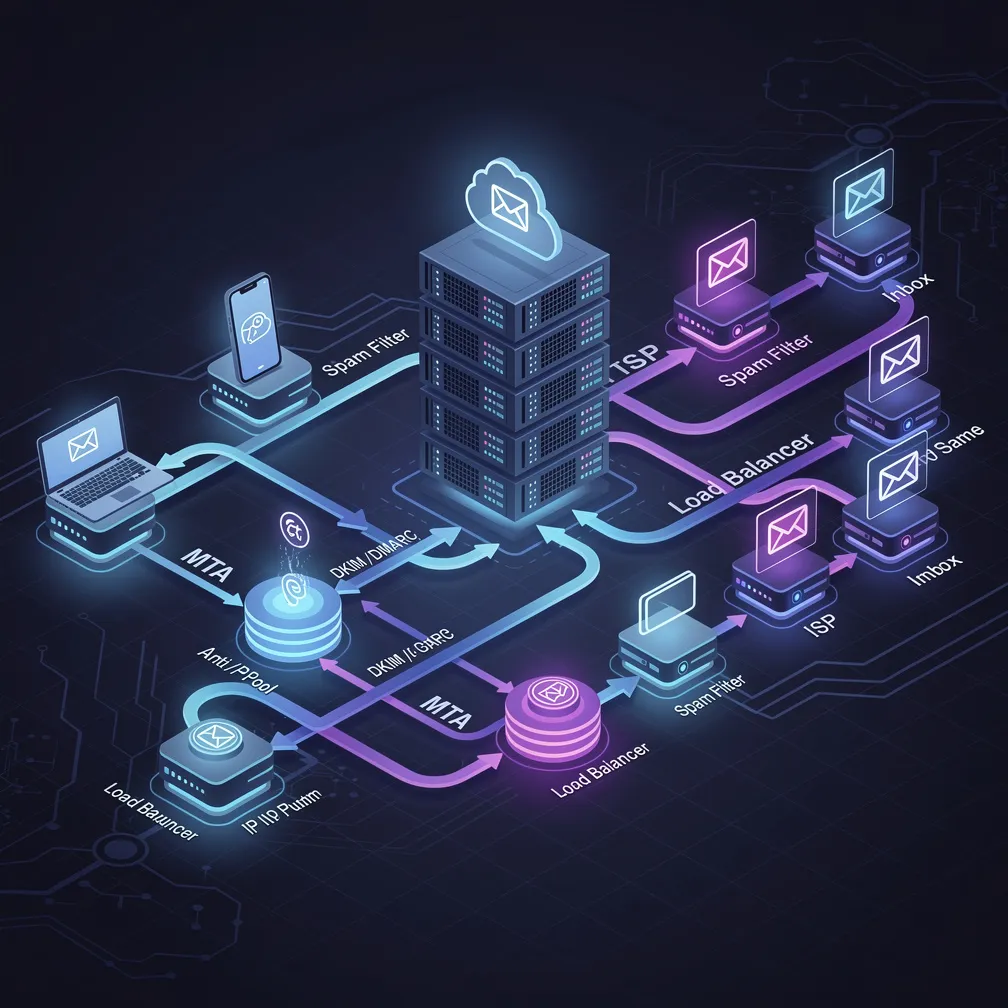
In today’s digital landscape, email remains the backbone of business communication. Despite the rise of messaging apps and collaboration platforms, email continues to be the most reliable channel for reaching customers, partners, and stakeholders. However, sending emails is only half the battle—ensuring they actually reach their destination is where email delivery service quality becomes mission-critical.
A professional email delivery service isn’t just about hitting “send.” It’s about infrastructure, reputation management, compliance, and sophisticated routing that ensures your messages land in inboxes, not spam folders. For businesses that rely on email for customer engagement, transactional communications, or marketing campaigns, delivery rates directly impact revenue and customer satisfaction.
Not all email services are created equal. Consumer email platforms like Gmail or Outlook are designed for individual use, while professional email delivery services are engineered for scale, reliability, and deliverability. Here’s what sets them apart:
Enterprise-grade email delivery services operate on distributed server networks with built-in redundancy. This means if one server experiences issues, your emails automatically route through backup systems. This architecture ensures 99.9%+ uptime—critical when you’re sending time-sensitive transactional emails or coordinating with global teams.
Your sending IP address has a reputation score that mailbox providers like Gmail, Microsoft, and Yahoo use to determine whether your emails deserve inbox placement. Professional email delivery services maintain dedicated IP pools, monitor reputation metrics in real-time, and implement authentication protocols (SPF, DKIM, DMARC) that prove your emails are legitimate.
Modern email delivery services use machine learning to optimize send times, route emails through the best-performing servers, and adapt to recipient behavior patterns. This intelligence significantly improves open rates and engagement while reducing the likelihood of being flagged as spam.
Email security threats have evolved dramatically. Phishing attacks, business email compromise (BEC), and man-in-the-middle attacks are more sophisticated than ever. A reliable email delivery service must provide multiple layers of protection:
For organizations in healthcare, finance, or government sectors, these security features aren’t optional—they’re mandatory for regulatory compliance and protecting sensitive information.
Even with perfect infrastructure, your emails won’t matter if they land in spam folders. Deliverability is the science and art of inbox placement, and it requires constant monitoring and optimization.
Professional email delivery services provide:
These capabilities are particularly crucial for marketing teams running email campaigns. A 1% improvement in deliverability can translate to thousands of additional customers reached and significant revenue impact.
Startups often begin with basic email solutions, but as transaction volumes grow—from hundreds to thousands to millions of emails per month—infrastructure needs change dramatically. A scalable email delivery service grows with you without degrading performance.
Whether you’re sending 10,000 password reset emails per day, distributing weekly newsletters to 500,000 subscribers, or coordinating communication across a global enterprise, your email infrastructure should handle volume spikes seamlessly during peak periods.
Modern businesses use dozens of software tools. Your email delivery service needs to integrate smoothly with CRM platforms, marketing automation tools, e-commerce systems, and custom applications. Robust APIs allow developers to embed email functionality directly into applications while maintaining control over deliverability and security.
When evaluating email delivery services, focus on these key criteria:
Email isn’t going anywhere. As communication channels multiply, email remains the universal standard for business communication. But sending emails effectively requires more than just an email client—it requires professional infrastructure designed for security, deliverability, and scale.
Investing in a quality email delivery service isn’t just an IT decision; it’s a business strategy decision that impacts customer experience, operational efficiency, and revenue. Whether you’re protecting sensitive communications, ensuring transactional emails reach customers instantly, or maximizing marketing campaign ROI, your email delivery service is the foundation that makes it all possible.
Don’t leave email delivery to chance. Choose a service built for the demands of modern business communication.