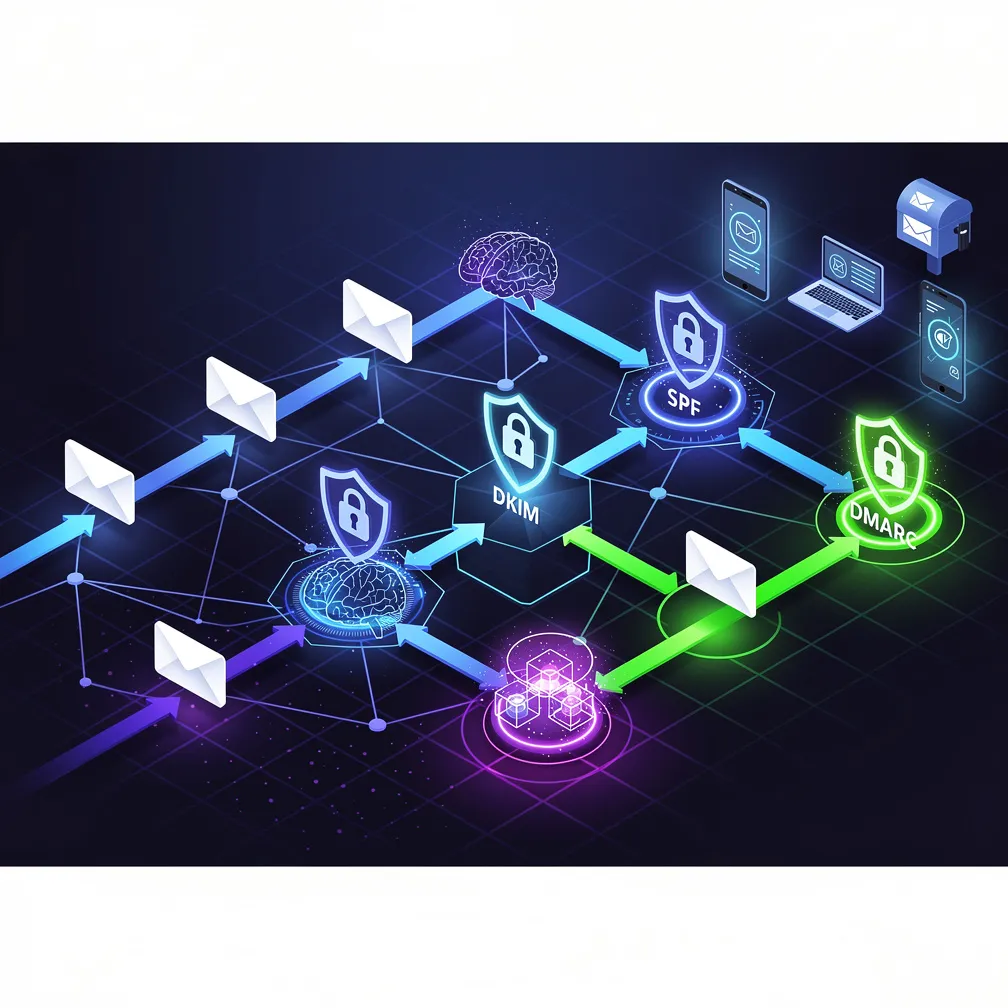
Email infrastructure decisions have never carried higher stakes. As we navigate 2026, email delivery has evolved from a simple technical consideration into a critical security, compliance, and business continuity imperative. With major inbox providers enforcing stringent authentication requirements and AI-powered spam filters becoming increasingly sophisticated, choosing the right email delivery service is no longer optional—it’s essential for maintaining communication reliability and protecting your sender reputation.
For IT directors and email administrators, the landscape has shifted dramatically. What worked even two years ago may no longer meet current standards, and the consequences of inadequate email infrastructure now include blocked messages, damaged reputation, and potential security vulnerabilities that expose your organization to phishing and spoofing attacks.
The email ecosystem has undergone fundamental changes that directly impact how organizations must approach email delivery. Understanding these shifts is crucial for making informed infrastructure decisions.
Google and Yahoo’s sender requirements, which began as recommendations, are now fully enforced across their platforms. These requirements mandate proper authentication, easy unsubscribe mechanisms, and strict spam complaint thresholds. Organizations sending to Gmail and Yahoo addresses without compliant infrastructure face immediate deliverability problems.
DMARC at enforcement has transitioned from best practice to table stakes. Inbox providers now expect senders to publish DMARC policies set to quarantine or reject, not merely monitor. This represents a significant shift in email authentication philosophy, where passive monitoring no longer suffices. Your email delivery providers must support comprehensive DMARC implementation and provide visibility into authentication results.
TLS 1.3 requirements have become standard, with older encryption protocols deprecated across major platforms. Email transmission security is no longer negotiable, and providers still supporting outdated TLS versions create compliance and security risks.
IPv6 adoption has accelerated, with many inbox providers now preferring or requiring IPv6 connectivity. Organizations still operating exclusively on IPv4 infrastructure may experience deliverability challenges or find themselves unable to access certain features and optimizations.
Perhaps most significantly, AI-powered spam filtering has made sender reputation more critical than ever. Machine learning algorithms now analyze sending patterns, content characteristics, and engagement signals with unprecedented sophistication. A single reputation incident can have cascading effects across your entire email program.
When evaluating email delivery services 2026 options, certain capabilities have become non-negotiable. Your assessment should prioritize these essential features:
Authentication support must be comprehensive and automated. Look for providers offering seamless SPF, DKIM, and DMARC implementation with clear documentation and monitoring. The best email delivery service will handle authentication complexity while providing visibility into authentication results and failures.
Deliverability monitoring and analytics capabilities separate adequate providers from exceptional ones. You need real-time visibility into delivery rates, bounce classifications, spam complaints, and engagement metrics. Advanced providers offer predictive analytics that identify potential deliverability issues before they impact your sender reputation.
Scalability and throughput requirements vary by organization, but your infrastructure must accommodate both current volume and anticipated growth. Evaluate providers based on their ability to handle peak loads without degradation and their track record managing high-volume senders.
API flexibility and integration options determine how easily you can incorporate email delivery into your existing systems. Modern smtp relay service providers offer RESTful APIs, comprehensive webhooks, and libraries for popular programming languages. Integration complexity directly impacts implementation timeline and ongoing maintenance burden.
Compliance capabilities have become increasingly complex. Depending on your industry and geographic footprint, you may require GDPR compliance, HIPAA eligibility, SOC 2 certification, or other regulatory assurances. Verify that prospective providers maintain relevant certifications and can provide documentation supporting your compliance requirements.
Dedicated IP options and IP warming remain important considerations for organizations with significant sending volume or specific reputation management needs. Evaluate whether providers offer dedicated IPs, how they manage IP reputation, and whether they provide automated IP warming protocols for new addresses.
Understanding the distinctions between service categories helps align your selection with your specific use case:
Transactional email services specialize in application-generated messages like password resets, order confirmations, and account notifications. These platforms prioritize reliability, speed, and deliverability for time-sensitive messages. Choose a transactional email service when your primary need is automated, trigger-based messaging with high deliverability requirements.
Marketing email platforms focus on bulk promotional campaigns with features like template builders, list management, and campaign analytics. These services optimize for engagement tracking and campaign management rather than pure delivery speed.
Full SMTP relay providers offer infrastructure for routing email through their servers regardless of message type. These services provide maximum flexibility, supporting both transactional and marketing use cases through standard SMTP protocols.
Managed email delivery services combine infrastructure with strategic guidance, offering deliverability consulting, reputation management, and optimization recommendations. Organizations with complex requirements or limited internal email expertise benefit most from this comprehensive approach.
Recent innovations have transformed what’s possible in email delivery infrastructure:
AI-driven send-time optimization now analyzes recipient behavior patterns to determine optimal delivery timing for each individual recipient. This personalization happens automatically, improving engagement without manual intervention.
Predictive deliverability scoring uses machine learning to assess message characteristics and predict inbox placement likelihood before sending. This capability allows preemptive adjustments to improve deliverability outcomes.
Automated IP reputation management continuously monitors sending patterns and reputation metrics, automatically adjusting traffic distribution across IP pools to maintain optimal reputation across all addresses.
Real-time feedback loop processing has evolved beyond simple complaint handling. Modern systems analyze feedback loop data to identify patterns, automatically suppressing problematic recipients and adjusting sending strategies based on recipient signals.
Enhanced bounce classification with machine learning provides granular insight into delivery failures, distinguishing between temporary issues, permanent failures, and reputation-related blocks. This intelligence enables more sophisticated retry logic and list hygiene.
Selecting the best email delivery service for your organization requires systematic evaluation:
Choosing the right email delivery service transcends technical specifications—it’s a security and business continuity decision with lasting implications. Your email infrastructure affects customer communication, transaction confirmations, security notifications, and countless other critical business functions.
The providers you evaluate today will form the foundation of your communication infrastructure for years to come. Prioritize vendors demonstrating commitment to evolving standards, investing in innovative features, and maintaining the security and compliance postures your organization requires.
At Email Delivery Pro, we understand these complexities and provide the infrastructure, expertise, and support that modern organizations require. Whether you’re migrating from an existing provider or implementing email delivery infrastructure for the first time, our team brings the technical depth and strategic perspective to ensure your success.
Ready to evaluate your options? Visit our provider comparison page to see how different solutions stack up against your specific requirements, or contact our team to discuss your unique email delivery challenges.