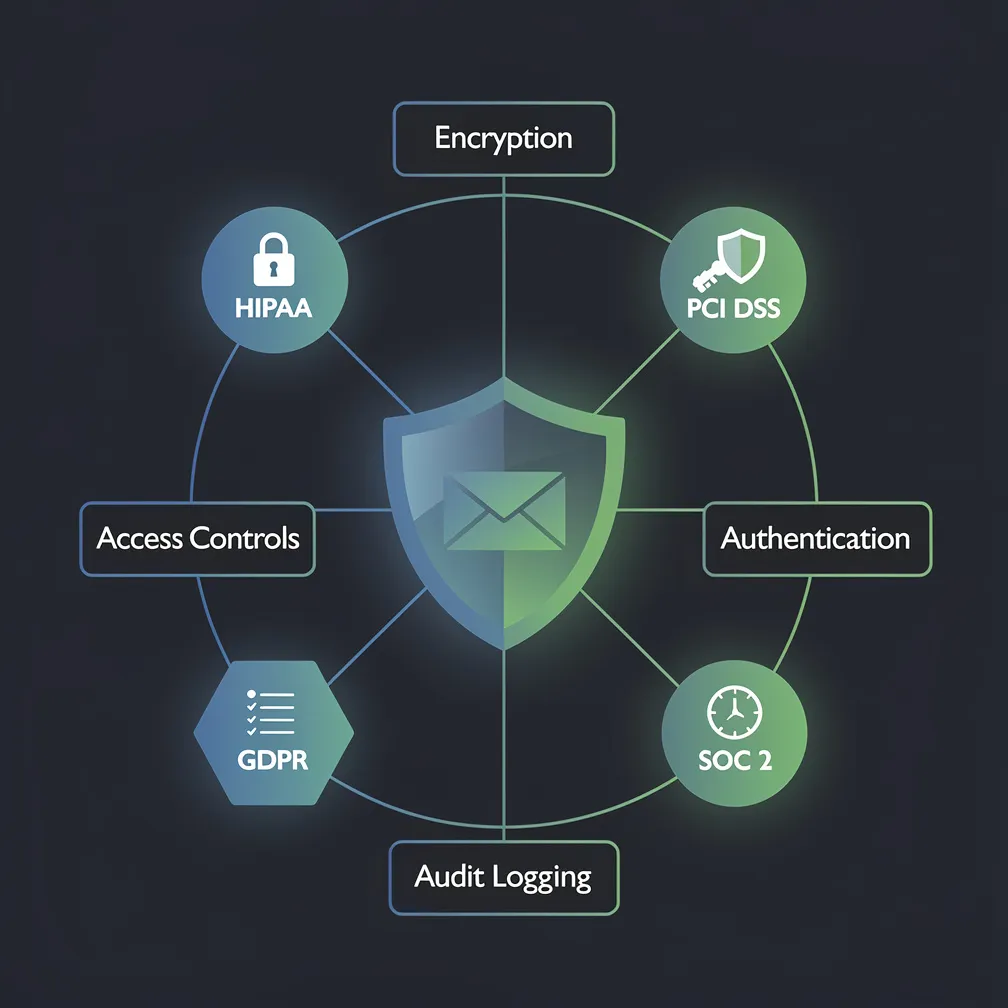
Email remains the primary vector for both business communication and security breaches, making it a critical focus area for compliance officers and IT managers. As regulatory frameworks evolve and enforcement intensifies, organizations face mounting pressure to demonstrate robust email security compliance across multiple jurisdictions and industry standards. The complexity of meeting these overlapping requirements while maintaining operational efficiency presents a significant challenge for modern enterprises.
Understanding and implementing comprehensive email compliance requirements is no longer optional—it’s a business imperative that directly impacts your organization’s legal standing, financial health, and reputation. This guide provides a structured approach to navigating the complex landscape of email security regulations and building a defensible compliance posture.
Multiple regulatory frameworks impose specific email security compliance obligations, each with distinct requirements and enforcement mechanisms. Understanding these frameworks is the foundation of any compliant email security program.
HIPAA (Health Insurance Portability and Accountability Act) mandates strict protections for Protected Health Information (PHI) transmitted via email. Organizations must implement encryption for PHI in transit, with technical safeguards that ensure confidentiality and integrity. The Security Rule requires covered entities to conduct risk assessments and implement appropriate encryption solutions based on those assessments. Additionally, HIPAA’s Breach Notification Rule establishes strict timelines for reporting unauthorized PHI disclosures, making email security incidents particularly time-sensitive for healthcare organizations.
PCI DSS (Payment Card Industry Data Security Standard) focuses on protecting cardholder data throughout its lifecycle. Requirement 4 specifically addresses encryption of cardholder data during transmission across open, public networks. Email systems that handle payment card information must implement strong cryptography and security protocols. Network segmentation requirements also impact email infrastructure, as systems processing cardholder data must be isolated from general business email environments to limit exposure and scope of compliance assessments.
SOC 2 (System and Organization Controls 2) evaluates service organizations against Trust Service Criteria covering security, availability, processing integrity, confidentiality, and privacy. Email systems represent critical control points across multiple criteria. Organizations pursuing SOC 2 attestation must demonstrate that email security controls are designed effectively and operating consistently. This includes access controls, encryption, monitoring, and incident response capabilities specific to email infrastructure.
GDPR (General Data Protection Regulation) requires data protection by design and by default, directly impacting how email systems handle personal data. Organizations must establish a lawful basis for processing personal data via email and implement appropriate technical measures to protect that data. The right to erasure creates particular challenges for email systems, as organizations must be able to locate and delete personal data across email repositories, archives, and backup systems within mandated timeframes.
While compliance frameworks vary in scope and focus, several core email security requirements appear consistently across regulations.
Encryption requirements form the backbone of email security compliance. Modern frameworks mandate TLS 1.2 or higher as the minimum standard for email transmission encryption. Organizations handling highly sensitive data must implement end-to-end encryption solutions that protect message content throughout its entire journey. Certificate management becomes critical, as expired or improperly configured certificates can create compliance gaps and operational disruptions. Regular certificate audits and automated renewal processes are essential components of compliant email infrastructure.
Access controls ensure that only authorized personnel can access email systems and sensitive communications. Role-based access control (RBAC) allows organizations to grant permissions based on job functions and business need. Multi-factor authentication (MFA) has evolved from a best practice to a baseline requirement across most frameworks, adding a critical layer of protection against credential compromise. Privileged access management for email system administrators requires additional scrutiny, including enhanced logging, approval workflows, and regular access reviews to prevent insider threats and unauthorized modifications.
Data retention and disposal requirements vary significantly across frameworks and jurisdictions. Organizations must establish retention schedules that satisfy the longest applicable requirement while balancing storage costs and discovery risks. Secure deletion procedures must ensure that data is rendered unrecoverable when retention periods expire. Litigation hold considerations complicate retention management, as organizations must be able to suspend normal deletion processes and preserve relevant email communications when litigation is reasonably anticipated.
Email authentication protocols have emerged as fundamental compliance controls that address multiple regulatory requirements simultaneously.
SPF (Sender Policy Framework), DKIM (DomainKeys Identified Mail), and DMARC (Domain-based Message Authentication, Reporting, and Conformance) collectively satisfy authentication control requirements across most compliance frameworks. These protocols verify that email messages originate from authorized sources and haven’t been tampered with during transmission. By implementing these standards, organizations demonstrate technical controls that prevent unauthorized use of their domains for phishing attacks, business email compromise, and other fraud schemes.
Authentication protocols align naturally with zero trust security principles by eliminating implicit trust in email communications. Rather than assuming messages from a particular domain are legitimate, authentication mechanisms provide cryptographic verification of sender identity and message integrity. This verification becomes increasingly important as compliance frameworks emphasize continuous validation over perimeter-based security models.
Authentication failures create significant compliance gaps that extend beyond immediate security risks. When organizations fail to implement proper email authentication, they lose visibility into unauthorized domain use, cannot effectively monitor for abuse, and lack evidence to demonstrate reasonable security measures during audits or breach investigations. These gaps can result in audit findings, regulatory sanctions, and increased liability in the event of security incidents.
Demonstrating compliance requires comprehensive audit trails and systematic evidence collection processes.
Audit trail requirements mandate detailed logging of email system activities. At minimum, organizations must capture sender information, recipient details, timestamps, delivery status, and authentication results for each message. These logs serve multiple purposes: security monitoring, incident investigation, compliance verification, and legal discovery. The granularity and completeness of email logs often determines whether organizations can successfully demonstrate compliance during audits or defend against regulatory enforcement actions.
Log retention periods vary by framework, with some regulations requiring retention of audit logs for multiple years. Organizations must implement log management solutions capable of securely storing, indexing, and retrieving email logs throughout the required retention period. Automated monitoring and alerting capabilities transform passive log collection into active security controls, enabling real-time detection of suspicious activities, policy violations, and potential compliance breaches.
Third-party auditor expectations have evolved as email security compliance has matured. Auditors routinely examine email security controls, test authentication mechanisms, review access logs, and validate encryption implementations. Common audit findings include incomplete logging, excessive privileged access, inadequate encryption for sensitive data, and missing or outdated documentation. Understanding these common pitfalls allows organizations to proactively address weaknesses before formal assessments.
Comprehensive documentation transforms technical controls into demonstrable compliance evidence.
Required policies establish the governance framework for email security compliance. An acceptable use policy defines appropriate email usage and prohibited activities. Data classification policies specify how different types of information should be handled via email, including encryption requirements and approved transmission methods. Incident response policies outline procedures for detecting, reporting, and responding to email security incidents, including breach notification obligations under various frameworks.
Procedure documentation provides operational details that demonstrate how policies are implemented in practice. Configuration standards specify technical requirements for email systems, including encryption protocols, authentication mechanisms, and access controls. Change management procedures ensure that modifications to email infrastructure are properly authorized, tested, and documented. Vendor management procedures address due diligence requirements for email service providers, including contract provisions, security assessments, and ongoing monitoring.
Evidence artifacts substantiate that security controls are functioning effectively. Penetration test results demonstrate that email systems withstand active attack attempts. Vulnerability scans identify potential weaknesses before they can be exploited. Configuration reviews verify that email systems are hardened according to documented standards and compliance requirements. These artifacts collectively form the evidence portfolio that auditors and regulators expect to review during compliance assessments.
Developing a sustainable email security compliance program requires systematic planning and continuous improvement.
The gap analysis process begins with inventorying current email security controls and comparing them against applicable compliance requirements. This assessment identifies control deficiencies, documentation gaps, and areas where current implementations fall short of regulatory standards. Honest gap analysis provides the foundation for prioritized remediation efforts and realistic compliance roadmaps.
Control mapping across multiple frameworks reveals overlapping requirements and opportunities for efficiency. Many email security controls satisfy requirements across multiple regulations simultaneously. By mapping controls to all applicable frameworks, organizations can optimize their compliance investments and avoid duplicative efforts. This cross-framework approach is particularly valuable for organizations subject to multiple regulatory regimes.
Implementation prioritization based on risk ensures that limited resources address the most critical compliance gaps first. High-risk areas—such as unencrypted transmission of sensitive data or inadequate access controls—warrant immediate attention regardless of implementation complexity. Lower-risk gaps can be addressed through phased implementation aligned with business planning cycles and budget availability.
Continuous monitoring and improvement transforms compliance from a point-in-time achievement to an ongoing operational capability. Regular control testing, automated compliance monitoring, and periodic reassessments ensure that email security compliance keeps pace with evolving threats, changing regulations, and organizational growth. This cycle of assessment, remediation, and validation creates a mature compliance posture that withstands scrutiny and adapts to new requirements.
Vendor selection criteria for compliant email delivery significantly impact overall compliance posture. Organizations should evaluate potential email service providers based on their security certifications, compliance attestations, encryption capabilities, audit logging features, and contractual commitments. The right vendor partnership extends your compliance capabilities and provides expertise that supplements internal resources. When evaluating email delivery solutions, consider using comparison tools to assess how different providers stack up against your specific compliance requirements.
Email security compliance represents a complex but manageable challenge for organizations willing to invest in systematic planning and implementation. By understanding the requirements of major compliance frameworks, implementing core security controls, establishing robust authentication mechanisms, maintaining comprehensive audit trails, documenting policies and procedures, and building a continuous improvement culture, compliance officers and IT managers can create email security programs that satisfy regulatory obligations while supporting business objectives. The investment in email security compliance pays dividends through reduced breach risk, improved operational resilience, and demonstrated commitment to protecting sensitive information entrusted to your organization.