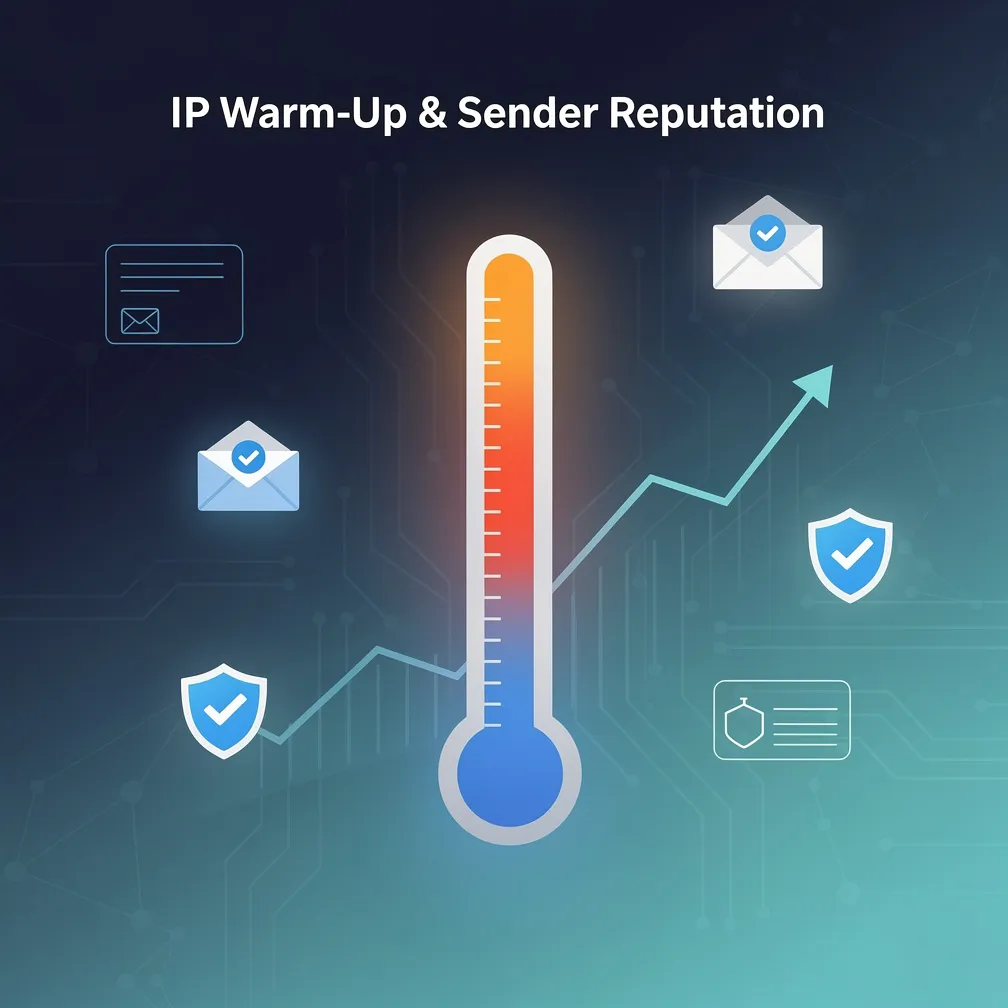
Your new dedicated IP has zero sender reputation. Send 50,000 emails tomorrow, and watch them vanish into spam folders—or get blocked entirely.
This is the harsh reality of email deliverability. ISPs don’t trust unknown senders, and a dedicated IP is essentially a stranger until you prove otherwise.
Internet Service Providers judge your sender reputation by monitoring engagement rates, complaint rates, and sending patterns. A new IP has no history, making ISPs suspicious of sudden high-volume sends.
Skip the IP warming schedule, and you’ll trigger spam filters, damage your inbox placement, and potentially blacklist your IP before you’ve even started. The cost? Lost revenue, wasted marketing spend, and months rebuilding trust.
Phase 1 (Days 1-3): Start with 200-500 emails daily to your most engaged subscribers. These are recipients who consistently open and click.
Phase 2 (Days 4-7): Double your volume every 2-3 days, reaching 2,000-5,000 emails. Monitor bounce rates and complaints closely.
Phase 3 (Days 8-14): Scale to 10,000-25,000 daily sends. Expand to moderately engaged segments while maintaining strong engagement metrics.
Phase 4 (Days 15-30): Gradually increase to your target volume. Most senders reach full capacity by day 30, though high-volume senders may need 45-60 days.
The difference between inbox and spam folder often comes down to patience and process. IP warm-up isn’t glamorous, but it’s the foundation of every successful email program running on a dedicated IP.
What’s been your biggest challenge with email deliverability? Drop a comment below—let’s solve it together.