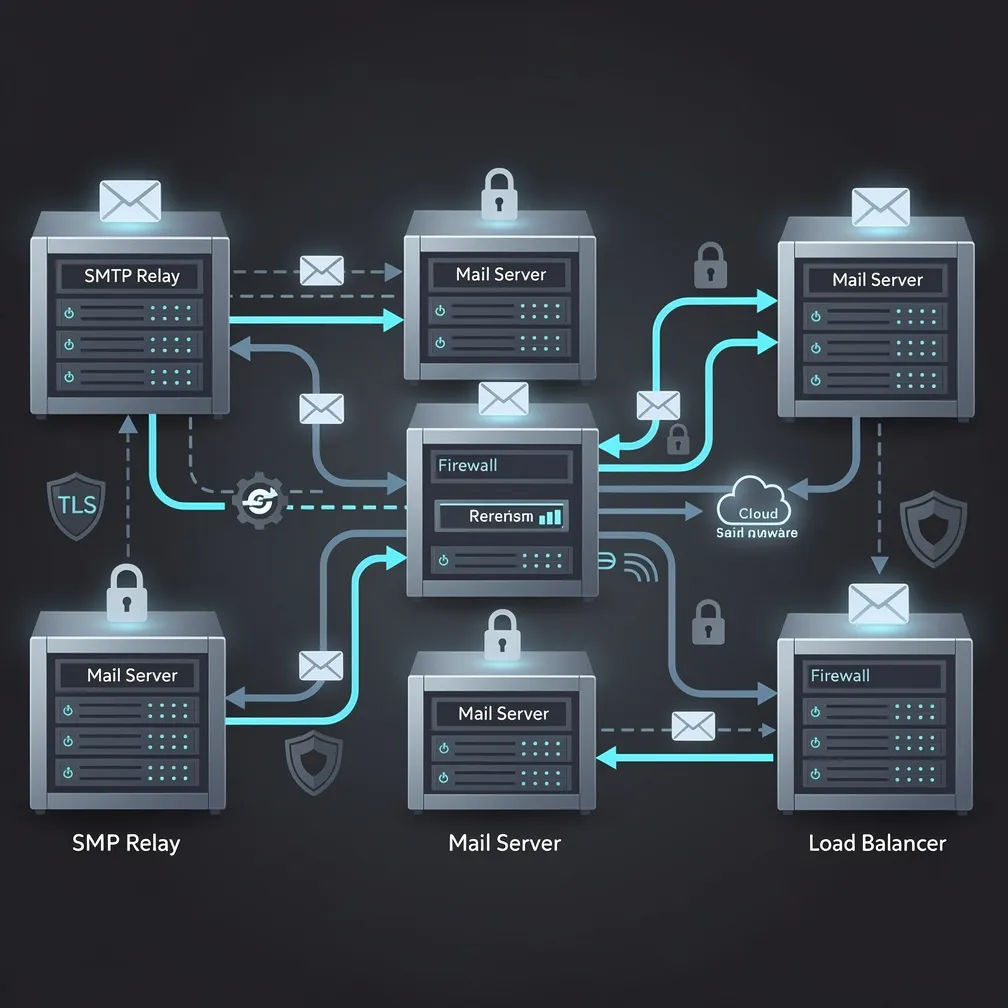
As businesses scale their email operations in 2026, the role of SMTP relay services has become more critical than ever. An SMTP relay acts as an intermediary mail server that receives outgoing emails from your application or email client and forwards them to their final destination. Unlike direct SMTP sending, which can face deliverability challenges, an email relay service provides enhanced infrastructure, reputation management, and compliance capabilities essential for enterprise communications.
With email deliverability rates under constant pressure from increasingly sophisticated spam filters and stringent authentication requirements, implementing SMTP best practices is no longer optional—it’s a business imperative. This guide explores the foundational strategies that security-conscious organizations must adopt to ensure reliable, compliant email delivery.
In 2026, proper email authentication is the cornerstone of any reliable SMTP relay configuration. Three authentication protocols form the essential security layer:
SPF (Sender Policy Framework) validates that emails originate from authorized mail servers. Your SPF record must explicitly include your email relay service’s IP ranges. A misconfigured SPF can result in immediate rejection by recipient servers, particularly for high-security domains in healthcare, finance, and government sectors.
DKIM (DomainKeys Identified Mail) adds a cryptographic signature to your emails, proving they haven’t been tampered with in transit. Your SMTP relay provider should generate unique DKIM keys for your domain and rotate them periodically as part of your security posture. Major providers like Gmail and Microsoft now heavily penalize emails lacking valid DKIM signatures.
DMARC (Domain-based Message Authentication, Reporting and Conformance) ties SPF and DKIM together, telling recipient servers what to do with emails that fail authentication. Organizations should start with a “p=none” policy to monitor, then progress to “p=quarantine” and eventually “p=reject” as confidence in their configuration grows. DMARC reporting provides invaluable threat intelligence about phishing attempts and configuration issues.
Your SMTP relay infrastructure directly impacts deliverability rates. Leading organizations implement several critical practices:
Dedicated IP addresses provide complete control over sender reputation but require sufficient volume (typically 50,000+ emails monthly) to maintain consistent sending patterns. Shared IP pools work well for smaller organizations, leveraging the provider’s established reputation, but you inherit some risk from other senders on the same infrastructure.
IP warming remains essential when establishing new sending infrastructure. Begin with low volumes to trusted recipients, gradually increasing over 4-6 weeks. Sudden volume spikes trigger spam filters and can permanently damage IP reputation.
List hygiene directly affects your sender reputation. Implement real-time email verification at signup, remove hard bounces immediately, and suppress engagement-based segments (users with no opens/clicks in 180+ days). Every bounce and complaint degrades your reputation with ISPs.
Transport Layer Security (TLS) encryption is mandatory for protecting email content in transit. Configure your SMTP relay to enforce TLS 1.2 or higher (TLS 1.3 preferred in 2026) for all connections. Many compliance frameworks—including HIPAA, PCI DSS, and SOC 2—require encrypted email transmission.
Implement opportunistic TLS (STARTTLS) as a minimum, but enforce mandatory TLS for sensitive business communications. Modern email relay services provide visibility into encryption status, allowing you to identify recipients who don’t support secure connections and adjust your communication strategy accordingly.
Intelligent rate limiting prevents your email infrastructure from triggering anti-spam mechanisms while ensuring critical messages reach recipients promptly. Configure per-hour and per-day sending limits based on your historical patterns and recipient server requirements.
Major ISPs like Gmail, Yahoo, and Microsoft impose their own rate limits. Exceeding these thresholds results in temporary blocks (soft bounces) that can cascade into reputation damage. Quality SMTP relay providers offer automatic throttling that respects recipient server limits while optimizing delivery speed.
Comprehensive monitoring transforms your SMTP relay from a black box into a strategic asset. Track these critical metrics:
Establish automated alerts for anomalies: sudden delivery rate drops, spam complaint spikes, or authentication failures. These signals often precede major deliverability incidents and enable proactive response before customer impact escalates.
Your email relay service must align with your compliance requirements. Organizations handling protected data should verify their provider offers:
SMTP relay best practices in 2026 demand a security-first mindset combined with operational excellence. Organizations that invest in proper authentication, maintain infrastructure discipline, and implement comprehensive monitoring build resilient email operations capable of supporting mission-critical communications.
The threat landscape continues evolving, with AI-powered phishing and sophisticated impersonation attacks making authentication more critical than ever. By treating your SMTP relay as a core security control rather than commodity infrastructure, you protect both your organization’s reputation and your recipients’ trust—the foundation of effective business communication.